Project Overview & Operational Challenges
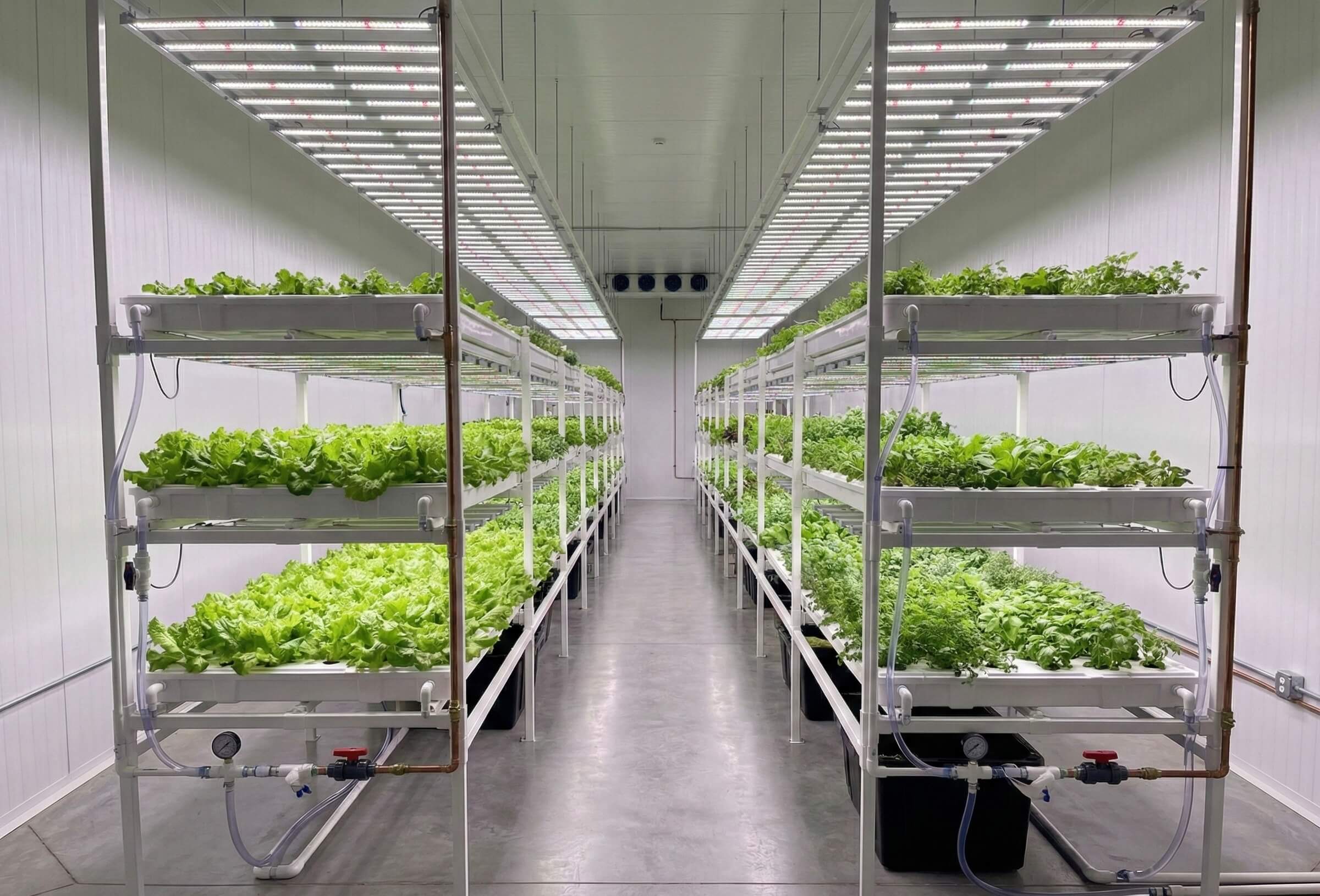
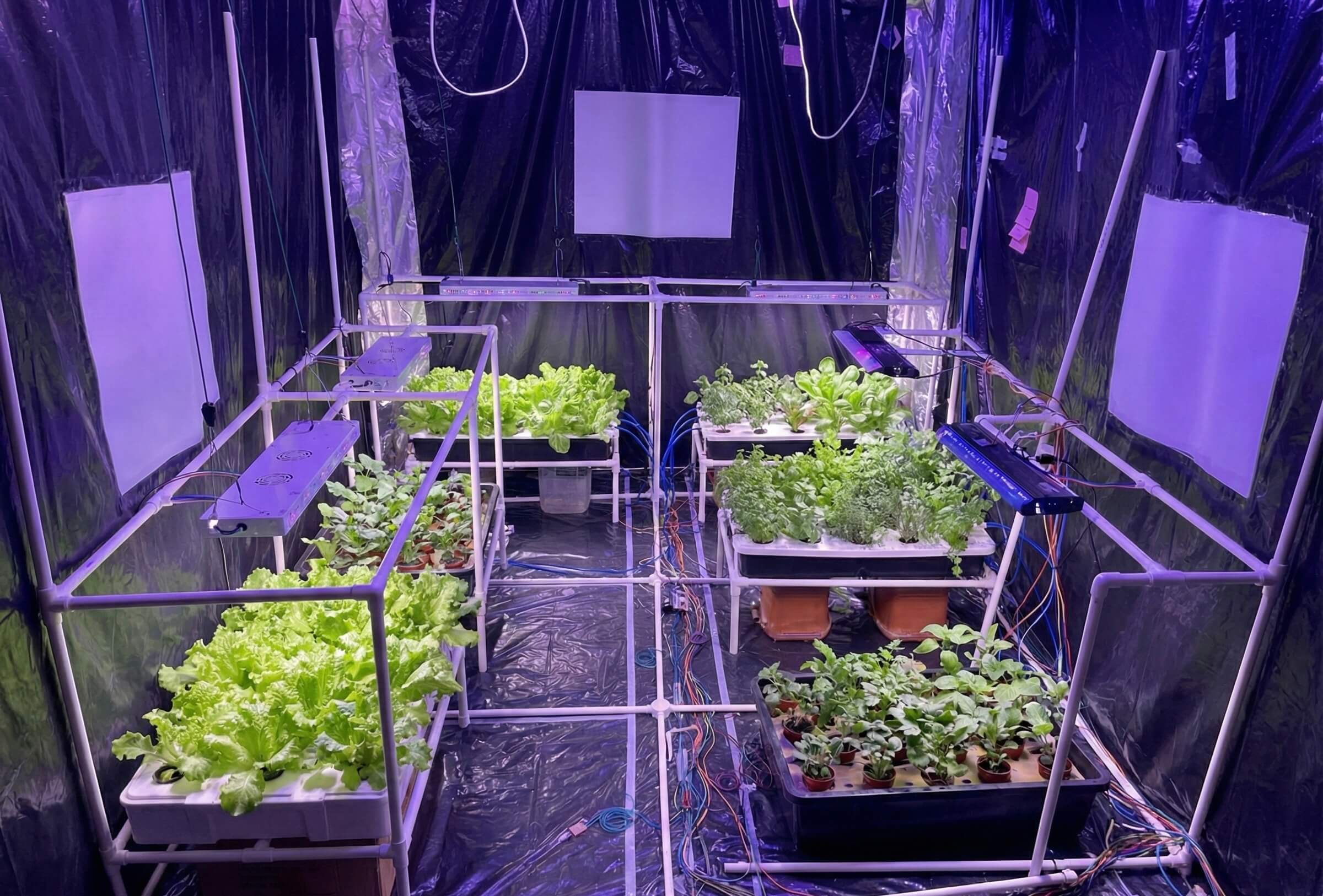
Billion Projects designed and implemented a complete monitoring, control, and automation ecosystem for indoor farming. This full-stack agri-automation system integrates sensors, custom IoT hardware, predictive ML, and closed-loop environmental control. By seamlessly integrating advanced sensor technologies and intelligent software, we created a smart environment where nearly 90% of operational tasks are automated, optimizing resource usage and enhancing crop growth.
The client faced several critical operational hurdles regarding the delicate balance of complex environmental variables. Continuous monitoring was required for temperature, humidity, AQI, CO2, soil pH/moisture, light intensity (PAR/Lux), and water properties, leading to data overload that made extracting insights difficult. Furthermore, manual monitoring was time-intensive, prone to latency regarding plant health responses, and resulted in high labor costs that the client aimed to reduce significantly.
Technical Solution & Business Outcomes
To address these challenges, we developed a comprehensive, end-to-end automation architecture tailored for high-precision agriculture. The solution featured:
- Custom IoT & Sensor Fusion: Deployment of in-house designed PCBs and IoT devices to monitor air, soil, water, and energy, alongside high-resolution imaging for computer vision-based growth tracking.
- Advanced AI & Control Algorithms: Custom-trained ML/DL models process sensor data in real-time to execute automated decision-making for water, nutrients, lighting, and HVAC without human intervention.
- Unified Command Dashboard: A centralized interface offering deep visibility, custom automation rules, and real-time alerts.
The implementation resulted in a 60–70% reduction in labor, cutting daily on-site management down to essential strategic hours only. The system delivered enhanced yield and quality through precise environmental adjustments and provided operational scalability, allowing the client to scale without a linear increase in management overhead. This project successfully transformed a labor-intensive process into a highly responsive, efficient smart farm.